Showing posts with label protein. Show all posts

Wednesday, July 17, 2019

What is red meat?

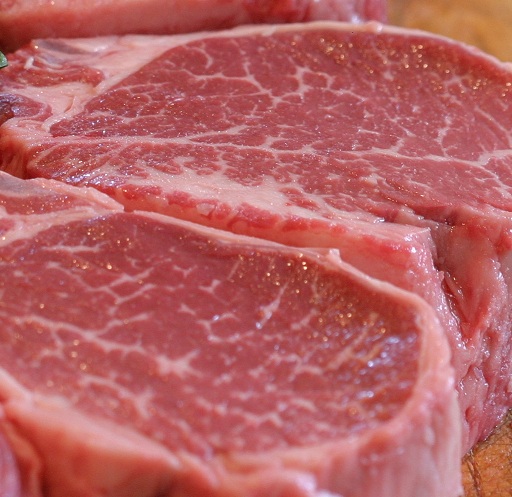
Red meat is commonly considered to include beef, veal, pork and lamb (fresh, minced and frozen). In recent years, red meat has attracted much debate regarding its impact on health and the environment. Consumption trends of meat vary greatly around the world. Significant increases in consumption are apparent in developing countries with Latin America, the Caribbean and East Asia seeing particularly large increases.

Red meat continues to play an important role in the human diet today; it contains high biological value (easily absorbed and utilized) proteins and essential micronutrients, including vitamins and minerals. The composition of the meat varies based on the animal species, sex, age, and diet, as well as the climate and activity during its growth. Total nitrogen, fat, and iron levels increase as the animal approaches maturity. It also makes a significant contribution to the monounsaturated and omega 3 fatty acids in our diet.

In addition, the ratio of polyunsaturated fatty acids (PUFAs) to saturated fatty acids (SFAs) decreases with the maturity of the animal.

In terms of micronutrients, red meat (particularly beef and lamb) is an excellent source of bioavailable iron and zinc, and also provides selenium, vitamin D, and B vitamins, with red meat being one of our major sources of vitamin B12. Red meat also contains bioactive compounds such as taurine, carnitine, creatine and some endogenous antioxidants.
What is red meat?

Monday, November 5, 2012

Meat protein

Proteins are the basic functional components of various high protein processed food products and thus determine textural, sensory and nutritional properties.

Protein is the dominant component in meat. Meat is rich in the essential amino acids – lysine, leucine, isoleucine and sulfur containing amino acids and in this sense meat is a high quality protein.

Meat is composed of three tissue: muscle tissue, connective tissue and adipose tissue. Inside the muscle tissue cell membrane, there are myofibrils containing alternating thin and thick protein filaments, namely the actin and myosin, which contract and relax in the living animal.

Myofibrils are the main component of meat structures which occupy about 70% of the volume of meat. 

Connective tissue is made up of protein and mucopolysaccharides. It is located throughout the muscle and determines the degree of meat tenderness.

Collagen is the most abundant protein found in mammals – in bone, cartilage, tendons, and ligament, enveloping muscle groups and separating muscle layers. The collagen content of meat and meat products is often of particular interest to food processors because it alters batter gelation properties.

The meat proteins, especially myosin, actin and to some extend tropomyosin, are the main water binding components in muscular tissue.

Interactions between meat proteins and water significantly affect the textural properties of meat. Approximately 97% of the water holding capacity of meat is related to the myofibrillar protein fraction. 

Protein meats contain small quantities of carbohydrates. When protein are heated to about 154 °C the amino acids in the proteins chains react with carbohydrate molecules and undergo a complex chemical reaction which resulted they turn brown and develop richer flavors. This reactions is called Maillard reaction.
Meat protein

Monday, March 8, 2010

Millfeeds for cattle


Millfeeds for cattle
Mill feeds are usually combined with other cereal grains and various supplements when fed to cattle.

They are regarded as very good sources of protein for cattle and can be expected to contain about twice as much protein as barley, grain sorghum or corn.

They are also a very good source of phosphorus and can be used in balancing the rations of lactating cows fed high legumes roughages.

Millrun, midds, bran and red dog comprise about one third of the concentrate mixture in wheat growing areas of the world, of their price is within an acceptable range.

Cattle generally do not like rations composed mostly of millfeeds, but pelleting improves consumption.

Wheat millrun, when pelleted, can be sued as the only cereal ingredient in a concentrate ration for lactating cows.

Bran improves palatability of ground grain meals when added to concentrate rations, but its use is apparently limited to the breeding herd and claves of beef cattle.

Red dog and higher quality midds are often used in calf meals or calf starter rations at 25 to 35% of the grain mixture because they are higher in energy and lower in fiber than other millfeeds.

Sorghum is widely used as an energy source in fattening cattle. Studies with steers showed a marked increase in carbohydrate digestion in the rumen for grain with so-called intermediate endosperm texture as compared to grain with either corneous or floury endosperm.

Flaked grain which has been conditioned by steam promotes after gains in beef cattle at lower feed cost.
Millfeeds for cattle

Popular Posts

Other important articles

Cereal Food Science